The Claroty Platform, powered by Claroty Claire™ — the industry's first CPS-native AI agent — hardens upstream, midstream, and downstream operations against cyber threats to protect the critical cyber-physical systems (CPS) on which the safety and stability of our energy infrastructure depend.
As the oil and gas sector accelerates digital transformation, once-manual, error-prone tasks are rapidly being replaced with computerized automation to increase extraction efficiency and boost safety. However, cloud migrations, remote maintenance access, and the integration of modern cyber-physical systems (CPS) are exponentially expanding the attack surface.
Because operations still depend considerably on aging, unpatchable OT infrastructure, facilities have become high-value targets for ransomware and state-sponsored acts of sabotage. Contending with these complex economic and geopolitical pressures includes the following critical industrial challenges:
Aging extraction and refining assets can’t be easily patched or swapped out due to expensive capital costs and the extensive downtime required for new installations.
Ransomware and targeted malware frequently threaten continuous operations, risking catastrophic fuel shortages, massive profit losses, and physical harm to plant personnel.
High variations in methods and environments create severe technical inconsistencies and security maturity blind spots.
Governments worldwide are rapidly shifting to strict compliance frameworks, legally enforcing the TSA Pipeline Directives, NIS2 Directive, SOCI Act, and the CISA Cross-Sector CPGs.
Generic IT security tools lack operational context and proprietary protocol coverage, threatening production uptime if they recommend standard IT remediation steps on fragile industrial control systems.
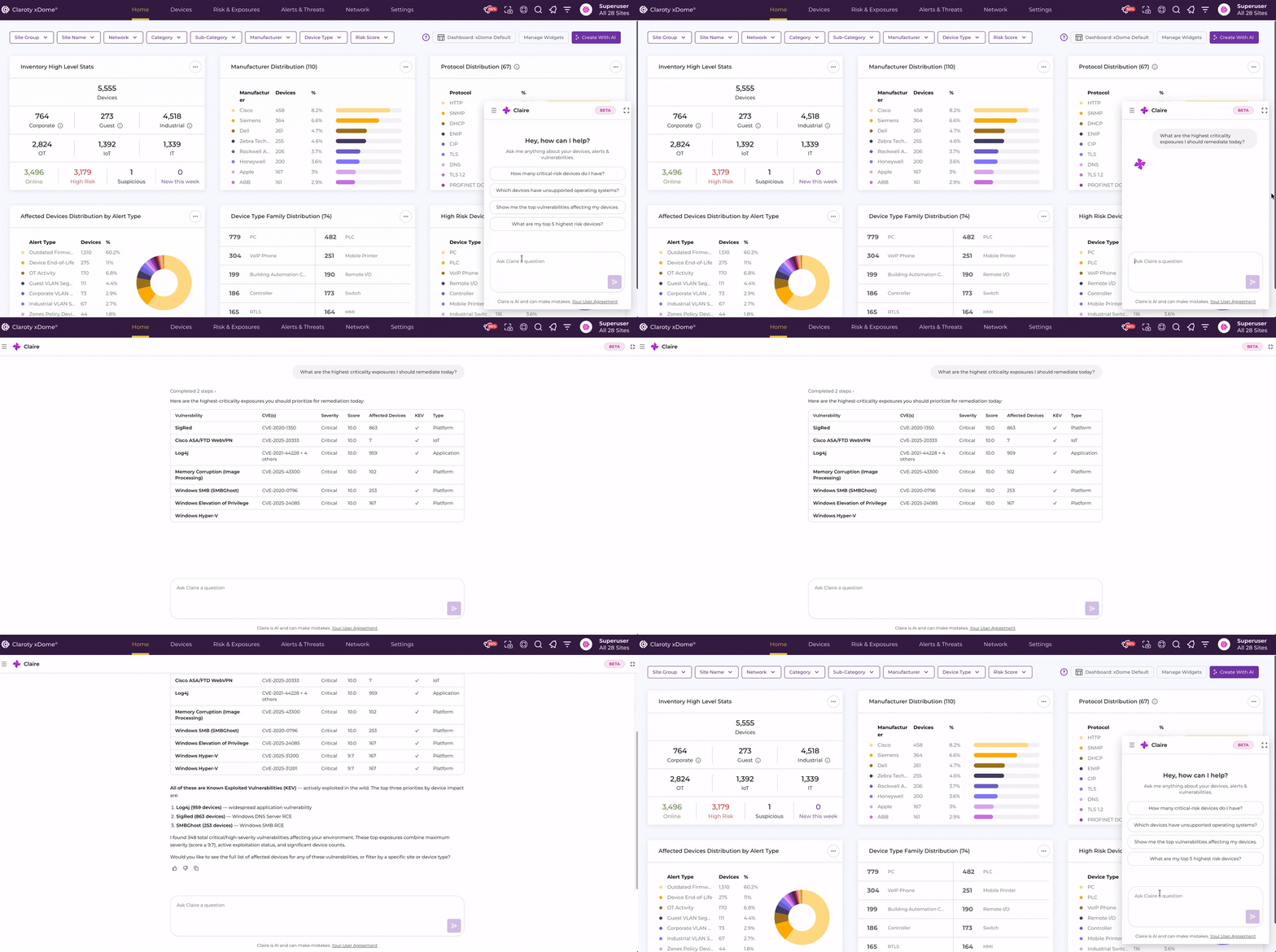
In this guided session, you'll discover how xDome provides comprehensive visibility and business context for all cyber-physical systems in your connected building environment.
By safeguarding the cyber-physical systems that keep global energy commerce moving continuously, Claroty delivers unmatched safety, reliability, and productivity across the entire industrial ecosystem.
Unify Security Governance & Asset Management: Establish clear, standardized risk metrics and communication workflows between your SOC and field engineers to accelerate incident response. Claroty's embedded AI acts as a single source of operational truth, translating complex technical alerts into safe, optimized industrial workflows.
Isolate Complex Operational Environments: Separate high-value processing fields, midstream pipeline control hubs, and downstream refinery networks from IT networks to block a ransomware breach from moving laterally. Claroty accelerates network defense using AI-powered asset zones and policy groups to enable virtual segmentation with policies enforced via existing firewalls.
Mitigate Unknown Operational Risks: Rapidly profile all CPS devices, flow computers, and safety instrumented systems to eliminate blind spots and uncover active exposures before they manifest as costly shutdowns.
Disruption-Free Asset Discovery: Map every OT, IoT, and BMS asset across globally distributed facilities without shipping hardware appliances, deploying local software, or scheduling intrusive maintenance windows. Claroty's AI-driven discovery methods leverage the industry's only CPS Library to resolve imprecise, conflicting, or hidden device signatures.
Purpose-Built Remote Access: Eliminate risky, unmanaged third-party vendor VPNs with a Zero Trust remote access solution engineered specifically for industrial personnel and systems. Claroty xDome Secure Access enables secure, real-time, time-bound, and fully audited maintenance interactions over proprietary protocol landscapes.
Compensating Controls for Legacy Infrastructure: Extend the lifecycles of aging, unpatchable drilling loops and legacy refinery systems by surrounding them with precise behavioral monitoring and strict, automated zone-based validation. Claroty maps device profiles and automatically surfaces AI-driven recommendations via Exposure Management to secure fragile hardware.
Automated Regulatory Reporting: Map site-level OT devices directly to rigorous international frameworks such as the TSA Pipeline Directives, ISA/IEC 62443, NIS2, the Australian SOCI Act, and the NIST CSF to generate audit-ready reporting templates in minutes.
Strict Critical Infrastructure Protection: Implement continuous monitoring of physical parameters, precision drilling systems, and valve control environments to satisfy outcome-based hazard requirements and protect public mobility.
Board-Ready Business Metrics: Translate complex CPS vulnerabilities into clear, financially-relevant risk scores, giving executive leadership the commercial justification needed to back critical operational technology security investments.
Domain-Specific AI: Trained on over a decade of CPS data and Team82 research, Claire thinks in operational terms and understands physical process context.
Context over Noise: Eliminates alert fatigue by answering "What should I do next?" with prioritized, high-precision recommendations.
Human-in-the-Loop Safeguards: Engineered specifically for fragile industrial environments, Claire ensures safe remediation actions that never induce unplanned downtime.
“With Claroty, we’re getting information on activities that we would never be able to detect previously, even the people offshore. You immediately start getting alerts, so this is very impressive.”
Enrico PicciniDiscipline Manager, Instrument & Telecom at BW Offshore
Oil & gas CPS security involves protecting the operational networks, industrial control systems (ICS), and connected physical machinery that drive modern exploration, extraction, pipeline transportation, and chemical refining. This extends past generic IT environments to shield highly specialized assets, including flow computers, safety instrumented systems, precision drilling rigs, valve controls, tank ambient sensors, and distributed control systems (DCS).
In highly connected operations, corporate networks are inextricably tied to shop floor and pipeline environments. Cyberattackers frequently exploit unmonitored third-party remote connections or corporate email vectors to penetrate the industrial perimeter. Once inside, ransomware can transfer laterally to alter PLC configurations, disrupt pipeline pressure systems, or compromise safety loops — resulting in catastrophic physical outages, regional fuel shortages, and massive revenue drop-offs.
Claroty utilizes flexible, SaaS-driven discovery models integrated into your existing industrial network infrastructure and configuration management databases (CMDB). This completely eliminates the need to ship heavy physical equipment or plan intrusive site downtime, providing a unified, real-time inventory of newly discovered or acquired digital assets across globally distributed multi-plant environments within hours of deployment.
Yes. Replacing highly certified, multi-million dollar extraction or refining machinery simply because it cannot support modern operating system patches is commercially impossible. Claroty changes the paradigm by utilizing precise network segmentation, virtual baseline simulation, and AI-powered exposure management, neutralizing active cyber threats natively on the wire without requiring direct device modifications or intrusive overhauls.
As national regulatory bodies classify energy logistics and fuel distribution networks as critical infrastructure, organizations are legally mandated to demonstrate strict cyber oversight. Claroty automatically monitors, logs, and maps your facility-level OT and CPS device behaviors directly against regional compliance standards like the US TSA Directives, the EU's NIS2 Directive, and Australia's SOCI Act, automatically generating dynamic, audit-ready compliance data packs.